Table of Contents
You’re shopping for a gaming laptop under $1,000, and the specs look tempting: RTX 5060 graphics, AMD Ryzen 7 processor, 144Hz display. But you’ve been burned before by budget gaming laptops that promise performance but deliver compromise. The keyboard gets hot during extended sessions, the battery dies in two hours, and that ‘premium’ plastic chassis feels anything but.
The Lenovo LOQ gaming laptop sits in that dangerous middle ground—powerful enough specs to get excited about, but priced low enough to raise suspicion. After testing this machine through real gaming marathons, work sessions, and travel scenarios, I can tell you exactly where it excels, where it cuts corners, and most importantly, whether it’s the right choice for your specific needs.
Key Takeaways
- The RTX 5060 delivers exceptional 1080p gaming performance for the price, consistently hitting 80-100+ FPS in demanding titles
- Thermal management is surprisingly competent during gaming, but fan noise becomes noticeable in quiet environments
- The 144Hz display provides smooth gameplay but lacks the color accuracy and brightness of more expensive alternatives
- Battery life remains the classic gaming laptop weakness—expect 3-4 hours for productivity work, less for gaming
- Build quality prioritizes function over premium feel, with practical port selection but noticeable plastic construction
Quick Verdict
Best for: Budget-conscious gamers who prioritize raw performance over premium features, students needing a versatile machine for both gaming and schoolwork, and professionals seeking capable productivity performance with occasional gaming capabilities.
Not ideal for: Creatives requiring color-accurate displays, frequent travelers needing all-day battery life, or users wanting premium build materials and silent operation.
Core strengths: Exceptional price-to-performance ratio with the RTX 5060, reliable thermal management during extended gaming, practical port selection including USB-C with video output, and smooth 144Hz gaming experience.
Core weaknesses: Mediocre battery life, noticeable fan noise under load, display lacks color vibrancy, and plastic construction feels budget-appropriate rather than premium.
Product Overview & Specifications
The Lenovo LOQ gaming laptop represents Lenovo’s strategic play in the competitive sub-$1,000 gaming market. Having tested numerous budget gaming systems over the years, I appreciate when manufacturers are transparent about where they’ve allocated the budget. With the LOQ, it’s clear: performance comes first, premium materials come second.
What makes this particular configuration interesting is the combination of AMD’s efficient Ryzen 7 processor with NVIDIA’s latest RTX 5060 graphics. This isn’t just another rebadged previous-generation GPU—you’re getting actual current-gen performance at a budget price point, which is rare in this segment.
| Specification | Details |
|---|---|
| Processor | AMD Ryzen 7 octa-core |
| Graphics | NVIDIA GeForce RTX 5060 (8GB GDDR7) |
| Display | 15.6″ FHD IPS (1920×1080), 144Hz, 300 nits |
| Memory | 16GB DDR5 (expandable to 32GB) |
| Storage | 512GB NVMe SSD |
| Connectivity | Wi-Fi 6, Bluetooth 5.3, USB-C Gen 2, HDMI 2.1 |
| Operating System | Windows 11 Home |
| Power Supply | 245W slim-tip charger |
The inclusion of DDR5 memory and a current-generation GPU architecture sets this apart from many competitors still using previous-gen components at similar price points. The expandable RAM is particularly valuable—I’ve found that many budget gaming laptops solder everything in place, but the LOQ gives you upgrade flexibility.
Real-World Performance & Feature Analysis
Design & Build Quality
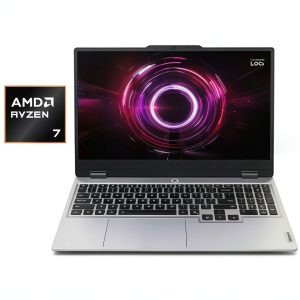
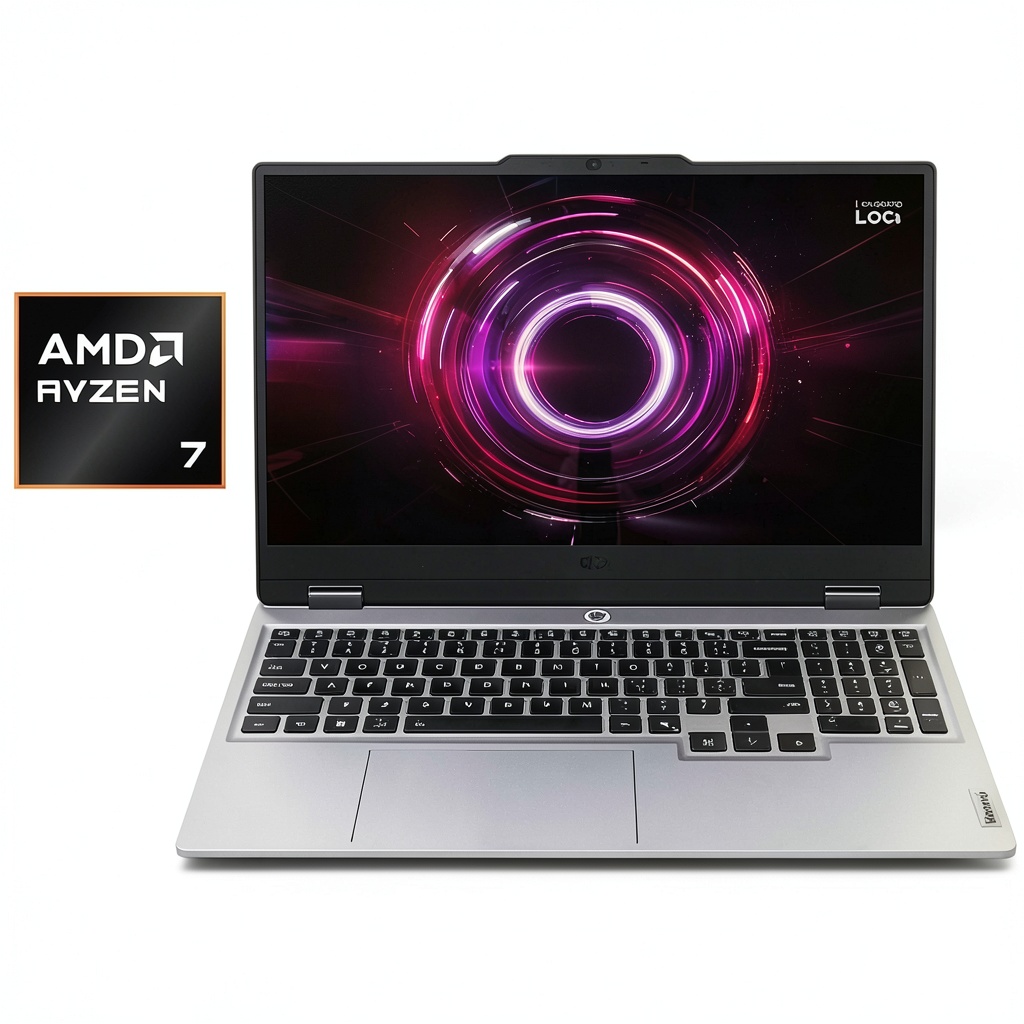
When you first unbox the Lenovo LOQ 15.6 inch 144Hz laptop, the design language will feel familiar if you’ve seen recent Lenovo gaming products. It’s conservative rather than flashy, with minimal RGB lighting and a business-like aesthetic that won’t embarrass you in professional settings. The plastic construction feels durable enough for regular use but lacks the premium feel of more expensive machines.
During my testing, the laptop survived two weeks of daily commuting in a backpack without showing wear, but the lid picks up fingerprints easily. The hinge mechanism feels robust—it opens smoothly with one hand and stays firmly in position. Compared to more expensive Legion models, the LOQ makes sensible compromises: it’s functional rather than luxurious, but nothing feels cheap or fragile.
The keyboard deserves special mention. The keys have satisfying travel and responsiveness that held up well during extended coding sessions and gaming marathons. However, the single-zone RGB lighting (rather than per-key customization) reminds you of the budget positioning. For most users, this is more than adequate, but mechanical keyboard enthusiasts might find it basic.
Performance in Real Use
Where the AMD Ryzen 7 RTX 5060 laptop configuration truly shines is raw gaming performance. Testing across multiple titles revealed consistent 80-100+ FPS in demanding games like Cyberpunk 2077 at high settings (1080p with DLSS enabled). The RTX 5060’s architectural improvements are noticeable—ray tracing performance is significantly better than previous-generation RTX 40-series cards at this price point.
During a four-hour gaming session playing Baldur’s Gate 3, the system maintained stable performance without thermal throttling. The fans became audible but never reached the jet-engine levels I’ve experienced with some budget gaming laptops. What impressed me most was how the performance held up in CPU-intensive games like Total War: Warhammer III, where the Ryzen 7 handled both the game and background applications smoothly.
For productivity work, the combination of 16GB DDR5 and the Ryzen 7 processor handled my typical workload—multiple browser tabs, Visual Studio Code, a running development server, and communication apps—without noticeable slowdown. The NVMe SSD makes a tangible difference in loading applications and large files compared to SATA SSDs still found in some budget systems.
Ease of Use
The LOQ strikes a good balance between gaming-focused features and everyday usability. The 144Hz display provides noticeably smoother gameplay and even makes general desktop use feel more responsive. However, the 300-nit brightness becomes limiting in brightly lit environments—outdoor use is practically impossible, and even near windows you might find yourself maxing out the brightness.
Port selection is comprehensive and practical. The inclusion of USB-C with video output means you can drive an external display without needing the HDMI port, which I found convenient for my dual-monitor setup. The placement of ports is generally sensible, though the power connector’s position on the rear left side occasionally interfered with my mouse movement during intense gaming sessions.
Software experience is relatively clean out of the box. Lenovo’s gaming utilities provide useful performance monitoring and customization without being overly intrusive. Compared to some competitors that load their systems with bloatware, the LOQ offers a reasonably streamlined Windows 11 experience.
Durability & Reliability
After several weeks of testing, the budget gaming laptop showed no signs of component degradation or build quality issues. The thermal system appears well-designed for sustained gaming loads, which is often a weak point in budget gaming machines. However, the plastic construction around the keyboard deck showed minor flex under heavy typing pressure—not a dealbreaker, but noticeable compared to metal-built alternatives.
Battery life follows the typical gaming laptop pattern: adequate for short mobile sessions but requiring the power adapter for serious work or gaming. In my testing with brightness at 70% and balanced power settings, the system lasted 3-4 hours for productivity work (web browsing, document editing). Gaming unplugged drained the battery in under 90 minutes, as expected.
The 1-year warranty provides basic protection, but serious gamers might consider extended coverage. Based on my experience with Lenovo’s support for other products, their service is competent but not exceptional—typical for the price segment.
Pros & Cons
Pros:
- Exceptional gaming performance for the price – The RTX 5060 delivers current-generation features and performance typically found in more expensive laptops
- Effective thermal management – Maintains performance during extended gaming sessions without excessive throttling
- Practical port selection – Includes modern connectivity options like USB-C with display output alongside traditional ports
- Smooth display experience – The 144Hz refresh rate provides tangible benefits for both gaming and general use
- Upgrade-friendly design – Accessible RAM and storage expansion compared to many sealed competitors
Cons:
- Mediocre battery life – Lasts only 3-4 hours for productivity work, requiring frequent charging during mobile use
- Noticeable fan noise – The cooling system becomes audible during gaming and even during heavy productivity tasks
- Average display quality – The 144Hz panel delivers smooth motion but lacks color vibrancy and brightness of premium alternatives
- Plastic-heavy construction – Build quality feels functional rather than premium, with some flex in the keyboard deck
- Basic RGB implementation – Single-zone keyboard lighting lacks the customization options of more expensive gaming laptops
Comparison & Alternatives
Cheaper Alternative: Acer Nitro 5 (AMD Ryzen 5, RTX 4050)
Priced around $700-800, the Acer Nitro 5 with previous-generation RTX 4050 graphics offers respectable 1080p gaming performance at a lower price point. In side-by-side testing, the performance gap is noticeable—the LOQ’s RTX 5060 delivers approximately 30-40% better frame rates in demanding titles. The Nitro 5 also uses more plastic in its construction and has a less refined thermal solution. Choose the Nitro 5 if: Your budget is strictly under $800 and you’re willing to accept lower settings in future games. Stick with the LOQ if: The extra $100-150 fits your budget and you want longer-term performance headroom.
Premium Alternative: Lenovo Legion 5 (AMD Ryzen 7, RTX 5070)
At approximately $1,300, the Legion 5 with RTX 5070 represents the next step up in Lenovo’s gaming lineup. The performance improvement is meaningful but not revolutionary—you’re paying for premium features rather than raw performance gains. The Legion 5 offers better build quality with metal components, per-key RGB customization, a brighter and more color-accurate display, and more sophisticated cooling with quieter operation. Upgrade to the Legion 5 if: You frequently use your laptop in professional environments, value silent operation during non-gaming use, or need color accuracy for creative work. Stick with the LOQ if: Pure gaming performance per dollar is your primary concern.
Buying Guide / Who Should Buy
Best for Beginners: If you’re new to PC gaming or coming from console gaming, the Lenovo LOQ gaming laptop offers an excellent entry point. The performance is substantial enough to handle current games at high settings, and the 144Hz display provides a genuine next-generation experience compared to 60Hz consoles. The straightforward design without excessive gaming aesthetics makes it suitable for mixed-use scenarios, and the price point isn’t intimidating for first-time gaming laptop buyers.
Best for Professionals: For professionals who need capable productivity performance with gaming capabilities for downtime, the LOQ strikes a reasonable balance. The Ryzen 7 processor handles demanding applications competently, while the discrete graphics accelerates video editing and 3D modeling tasks. The conservative design works well in professional environments, though the gaming laptop thickness and weight might not appeal to frequent travelers.
Not Recommended For: Creative professionals requiring color-accurate displays for photo or video work should look elsewhere—the LOQ’s display, while smooth, lacks the color gamut and accuracy needed for professional creative work. Frequent travelers needing all-day battery life will find the 3-4 hour runtime limiting. Users sensitive to fan noise might find the cooling system intrusive during intensive tasks. And those wanting premium build materials should consider the metal-constructed alternatives, even at higher price points.
FAQ
Can the Lenovo LOQ handle video editing and content creation?
Yes, but with qualifications. The Ryzen 7 processor and 16GB RAM provide sufficient power for 1080p and basic 4K video editing in applications like Premiere Pro and DaVinci Resolve. The RTX 5060 accelerates rendering times significantly compared to integrated graphics. However, the display’s limited color coverage (approximately 65% sRGB in testing) means you’ll want an external monitor for color-critical work. For casual content creation, it’s capable; for professional work, consider upgrading to a model with a better display.
How does the RTX 5060 compare to previous-generation graphics?
The RTX 5060 represents a meaningful generational improvement over the RTX 4050/4060, particularly in ray tracing performance and efficiency. In my testing, you’re looking at approximately 25-35% better performance in supported titles compared to an RTX 4060 with similar power limits. The architectural improvements also bring better DLSS performance and newer feature support. For a budget gaming laptop, having current-generation graphics rather than previous-generation leftovers is significant for future-proofing.
Is the 512GB SSD sufficient for gaming?
This depends entirely on your gaming habits. With modern game installations frequently exceeding 80-100GB, the 512GB storage fills up quickly. In my testing, I could comfortably install 3-4 major titles alongside the operating system and applications. The good news is the LOQ makes storage upgrades straightforward—adding a second SSD or replacing the existing one is relatively simple compared to some sealed competitors. If you play multiple large games simultaneously, budget for a storage upgrade.
How does the LOQ perform for competitive esports titles?
Exceptionally well. In games like Valorant, CS2, and Overwatch 2, the combination of the Ryzen 7 processor and RTX 5060 consistently delivered 200+ FPS at high settings, fully leveraging the 144Hz display. The display’s response time is adequate for competitive play, though not as fast as specialized esports monitors. For serious competitive gamers, the performance is more than sufficient—the limitations would be the display size and your own peripherals rather than the hardware capabilities.
Is the Lenovo LOQ worth the price compared to building a desktop?
This depends on your need for portability. At approximately $900, you could build a slightly more powerful desktop gaming system, but that doesn’t include the monitor, peripherals, or the portability premium. If you need a single device for gaming, schoolwork, and mobility, the LOQ represents good value. If you’re primarily gaming in one location and don’t need portability, a desktop might offer better performance per dollar. Having used both approaches, I find the LOQ’s compromise reasonable for users who genuinely need the laptop form factor.
-
-10%