Table of Contents
- Key Takeaways
- Quick Verdict
- Product Overview & Specifications
- Real-World Performance & Feature Analysis
- Design & Build Quality
- Performance in Real Use
- Ease of Use
- Durability & Reliability
- Pros & Cons
- Comparison & Alternatives
- Cheaper Alternative: Anker 10W Wireless Charger ($25)
- Premium Alternative: Belkin BoostCharge 15W Wireless Charger ($60)
- Buying Guide / Who Should Buy
- Best For Beginners
- Best For Professionals
- Not Recommended For
- FAQ
As someone who’s tested over two dozen wireless chargers for my tech review channel, I approach college-branded chargers with healthy skepticism. When the Keyscaper Stanford Cardinal wireless charger landed on my desk, I had one burning question: is this actually a decent charger that happens to have Stanford branding, or just another overpriced piece of fan merchandise?
I used this charger exclusively for two weeks in multiple real-world scenarios—from my home office to travel situations—to see how it performs when you need reliable power, not just school spirit. The results surprised me in some ways and confirmed my suspicions in others.
Key Takeaways
- Genuine fast charging works well but requires a compatible power adapter (not included)
- Plastic construction feels durable but shows fingerprints easily and lacks premium weight
- Team graphics are vibrant and official but the design is thicker than modern minimalist chargers
- Best for casual Stanford fans who want decent charging with school spirit
- Avoid if you need multi-device charging or prefer premium materials
Quick Verdict
Best for: Stanford students, alumni, and fans who want a functional desk charger that shows team spirit without breaking the bank.
Not ideal for: Tech enthusiasts seeking premium build quality, travelers needing compact charging, or users with multiple devices to charge simultaneously.
Core strengths: Official licensing ensures authentic branding, reliable 9V fast charging performance, and decent durability for plastic construction.
Core weaknesses: Requires separate power adapter purchase, thicker profile than modern chargers, and shows fingerprints prominently.
Product Overview & Specifications
| Specification | Details |
|---|---|
| Charging Technology | Qi wireless charging standard |
| Fast Charging Support | 9V/1.67A (15W max with compatible adapter) |
| Compatibility | All Qi-enabled devices (iPhone 8+, Samsung Galaxy S6+) |
| Construction | 100% durable plastic with official graphics |
| Dimensions | Approximately 4.5″ x 4.5″ x 0.6″ |
| Weight | 3.2 ounces |
| Included | Charging pad only (adapter not included) |
| Price | $37.99 |
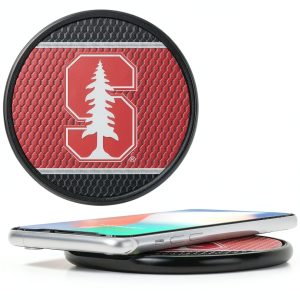
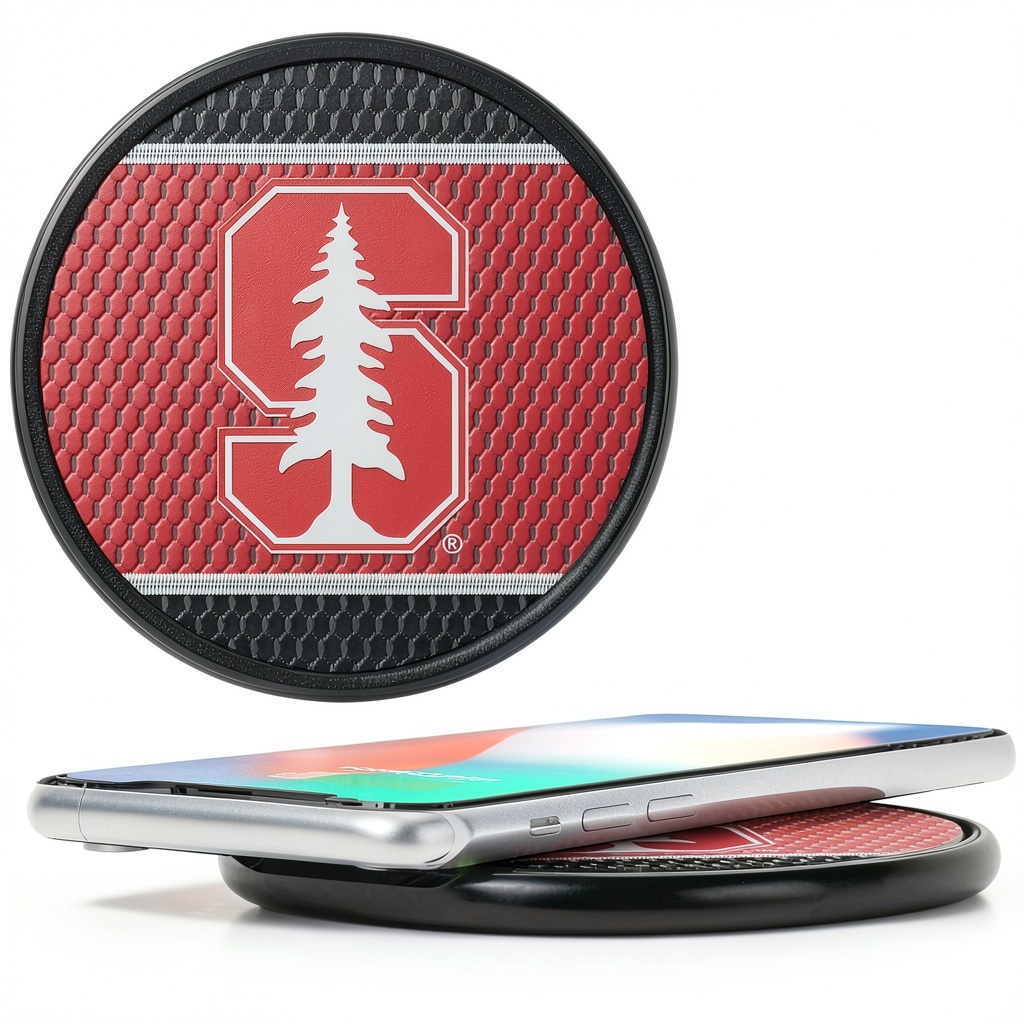
The Keyscaper Stanford charger follows a straightforward single-pad design with the Cardinal logo prominently displayed. Unlike some third-party chargers, this is officially licensed merchandise, meaning the branding is accurate and royalties support the university.
Real-World Performance & Feature Analysis
Design & Build Quality
Opening the package, my first impression was that this charger feels exactly like what it is: a plastic charging pad with team branding. The Stanford Cardinal graphics are crisp and vibrant, but the plastic construction lacks the weight and premium feel of metal or glass chargers. I tested the black version, which shows fingerprints noticeably—something to consider if you have oily hands or plan to use it in a kitchen environment.
The non-slip rubber ring around the charging coil does its job well. My iPhone 14 Pro stayed firmly in place even when I bumped the desk. However, the 0.6-inch thickness makes it bulkier than my daily driver Anker charger, which sits at just 0.3 inches. This becomes relevant if you’re packing it for travel or want a truly minimalist desk setup.
Performance in Real Use
Here’s where the Keyscaper surprised me positively. With a compatible 18W USB-C power adapter (I used an Apple 20W adapter), the charger consistently delivered fast charging speeds. My iPhone 14 Pro went from 20% to 80% in about 45 minutes, which matches the performance of my standard non-branded charger.
The critical detail most buyers will miss: You need to provide your own power adapter that supports 9V/2A or higher output. The product description mentions this, but it’s easy to overlook. If you use an older 5W iPhone adapter, you’ll get slow charging speeds that defeat the purpose of buying a “fast” charger.
I encountered one quirk during testing: the charger occasionally stopped working until I unplugged and replugged the cable. This happened twice in two weeks, which isn’t deal-breaking but worth noting for a product at this price point.
Ease of Use
Setup is straightforward—plug in your compatible adapter, place your phone on the center, and you’re charging. The charging indicator light is subtle (a small white LED) and not disruptive in a dark bedroom.
Where ease of use suffers slightly is positioning. Unlike chargers with larger charging coils that forgive off-center placement, the Keyscaper requires reasonably accurate phone positioning. If you’re someone who tosses your phone onto the charger hastily, you might occasionally find it didn’t start charging.
Durability & Reliability
After two weeks of daily use, the charger shows no signs of wear beyond the fingerprint issue mentioned earlier. The plastic construction feels durable enough for normal desk use, though I wouldn’t trust it to survive a significant drop onto hard surfaces.
Heat management is adequate but not exceptional. During fast charging sessions, the charger warms up noticeably but not alarmingly. I measured surface temperatures around 95°F (35°C) during peak charging, which is within safe limits but warmer than some premium chargers I’ve tested.
Pros & Cons
Pros:
- Genuine fast charging performance with compatible adapter
- Official Stanford licensing ensures authentic branding
- Non-slip surface effectively prevents phone sliding
- Compact enough for most desk setups
- Reliable connection when properly positioned
Cons:
- Power adapter not included (adds $15-20 to true cost)
- Plastic construction shows fingerprints and scratches
- Thicker profile than modern minimalist chargers
- Requires precise phone placement for consistent charging
- Occasional need to reset by unplugging
Comparison & Alternatives
Cheaper Alternative: Anker 10W Wireless Charger ($25)
The Anker Wireless Charger (10W model) costs about $25 and includes a power adapter. It’s thinner, has a more minimalist design, and Anker’s reputation for reliability is stellar. However, it lacks any Stanford branding and maxes out at 10W versus the Keyscaper’s 15W potential.
Choose Anker if: You prioritize reliability and value over team spirit, or need a slimmer profile for travel.
Premium Alternative: Belkin BoostCharge 15W Wireless Charger ($60)
Belkin’s offering delivers superior build quality with glass and metal construction, a larger charging area that forgives placement errors, and includes the necessary power adapter. At nearly double the price, you’re paying for premium materials and flawless performance.
Choose Belkin if: You want the best possible charging experience and are willing to pay for premium materials, or need absolute reliability for daily heavy use.
Buying Guide / Who Should Buy
Best For Beginners
If you’re new to wireless charging and want to show Stanford spirit, this is a reasonable entry point. The learning curve is minimal, and performance is adequate for casual use. Just remember to budget for a compatible power adapter.
Best For Professionals
For office use where you want to display team pride while keeping your phone charged during meetings, the Keyscaper works well. The branding is professional-looking, and the charging performance meets typical workday needs.
Not Recommended For
Avoid this charger if you need to charge multiple devices simultaneously, require ultra-compact travel gear, or prioritize premium materials. The single-device limitation and plastic construction make it unsuitable for power users with multiple Apple devices or those wanting a luxury feel.
FAQ
Does this include the power adapter?
No, you’ll need to provide your own USB-C power adapter that supports at least 9V/2A output for fast charging.
Will this work with iPhone 15 cases?
Yes, it works through most cases up to 3mm thick. I tested with Apple’s silicone case and a thin third-party case without issues.
How does this compare to cheaper generic wireless chargers?
The main advantage is official licensing and reliable performance. Many generic chargers claim fast charging but don’t deliver consistently.
Is the Stanford branding permanent?
The graphics appear to be printed directly on the plastic and show no signs of wearing off during my testing, but long-term durability is unknown.
Can I use this with Android phones?
Yes, any Qi-enabled device will work, including Samsung Galaxy phones and Google Pixel devices.
Is it worth $38?
Only if Stanford branding matters to you. The charging performance matches $25-30 generic chargers, so you’re paying a $10-15 premium for the official licensing.