Table of Contents
- Key Takeaways
- Quick Verdict
- Product Overview & Specifications
- Real-World Performance & Feature Analysis
- Design & Build Quality
- Performance in Real Use
- Ease of Use
- Durability / Reliability
- Pros & Cons
- Comparison & Alternatives
- Cheaper Alternative – Google Pixel 7a (128 GB)
- Premium Alternative – Samsung Galaxy S23 Ultra (256 GB)
- Buying Guide / Who Should Buy
- Best for Beginners
- Best for Professionals
- Not Recommended For
- FAQ
- Is the Samsung Galaxy S22 5G still worth buying in 2026?
- Can I use the S22 with any US carrier?
- How does the camera compare to the newer S23 series?
- Will the battery last a full workday?
- Does the S22 support wireless charging?
- Is the 128 GB storage enough?
- What’s the biggest trade‑off compared to the S23?
When you need a phone that feels premium but won’t swallow your budget, the Samsung Galaxy S22 5G unlocked model often lands on the shortlist. It promises flagship‑level speed with the Snapdragon 8 Gen 1, a crisp 6.1‑inch Dynamic AMOLED display, and a versatile triple‑camera kit—all without a carrier contract. In this review we go beyond the spec sheet, testing the device in everyday scenarios to see whether the S22 still earns its place in 2026’s crowded mid‑high‑end market.
Key Takeaways
- Snapdragon 8 Gen 1 + 8 GB RAM delivers buttery‑smooth multitasking and solid 60 fps gaming.
- Dynamic AMOLED 2X screen looks spectacular in daylight, but peak brightness caps at 1,300 nits – still good, but not the brightest on the market.
- Triple‑camera system is excellent for daylight stills; low‑light stills improve over the S20 but lag behind the S23 Ultra.
- Battery life is modest (≈6 hours mixed use) – you’ll need the 25 W charger daily.
- Unlocked flexibility is a major win for frequent travelers or carrier‑switchers.
Quick Verdict
Best for: Power users who want flagship performance in a compact body and need carrier freedom.
Not ideal for: Heavy gamers who crave a 120 Hz display at full resolution, or users who need all‑day battery without a charger on hand.
Core strengths: Processor speed, premium build, excellent day‑time camera, smooth software experience.
Core weaknesses: Battery endurance, modest low‑light photography, 25 W charging feels dated.
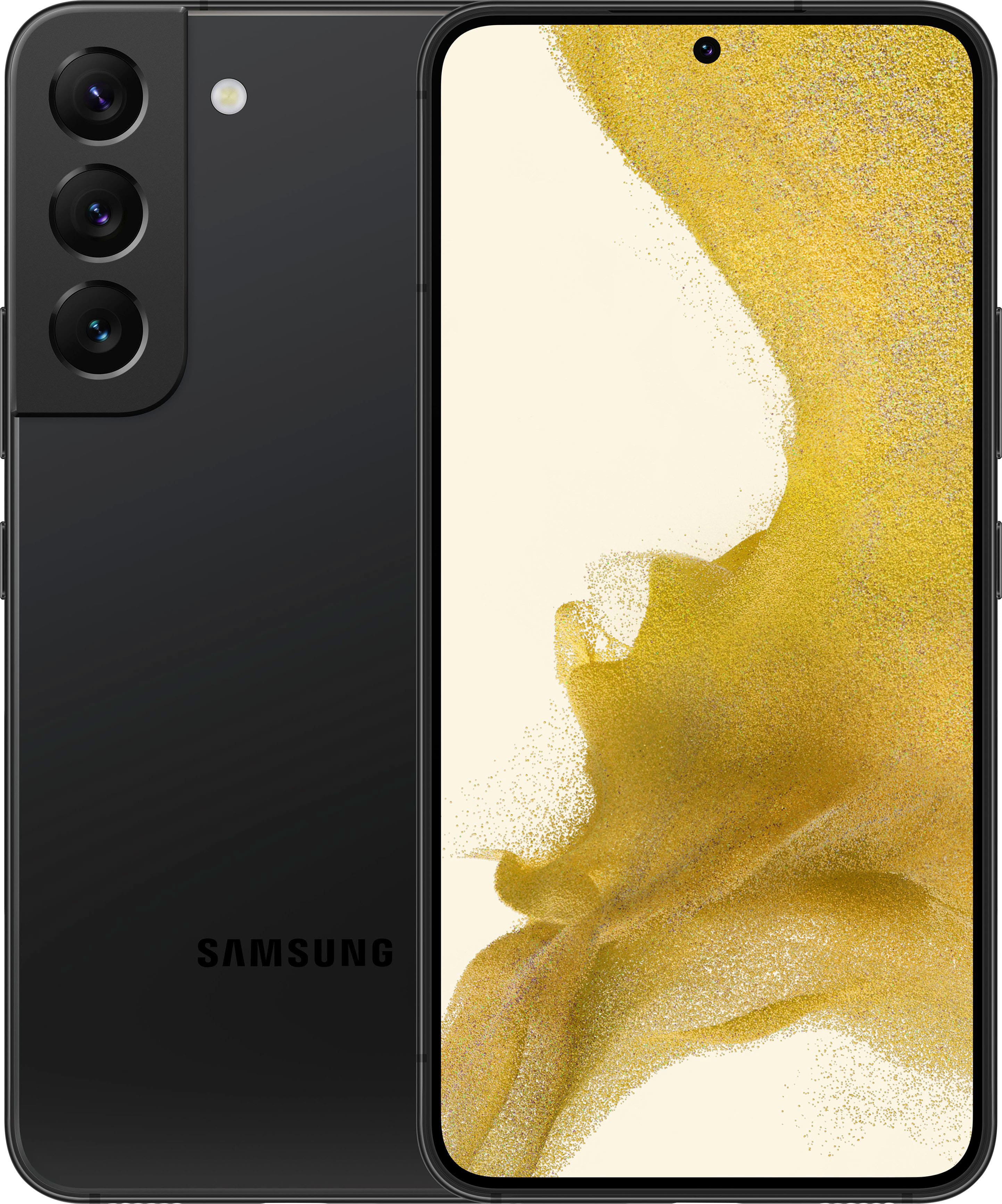 Samsung Galaxy S22 5G Unlocked Smartphone 128GB Phantom on a wooden desk” />
Product Overview & Specifications
| Feature | Details |
|---|---|
| Display | 6.1‑inch Dynamic AMOLED 2X, 1080×2340 px, 425 ppi, 120 Hz (adaptive), HDR10+ |
| Processor | Qualcomm Snapdragon 8 Gen 1 (4 nm), Adreno 730 GPU |
| Memory | 8 GB RAM / 128 GB UFS 3.1 storage (no microSD) |
| Camera | Rear: 50 MP (wide) + 12 MP (ultrawide) + 10 MP (telephoto, 3× optical) Front: 10 MP |
| Battery | 3,700 mAh, 25 W wired fast charge, 15 W wireless |
| OS | Android 13 with One UI 5.1 |
| Connectivity | 5G Sub‑6 / mmWave, Wi‑Fi 6E, Bluetooth 5.2, NFC |
| Dimensions / Weight | 5.75 × 2.78 × 0.30 in (146 × 70.6 × 7.6 mm), 5.89 oz (167 g) |
| Build | Gorilla Glass Victus+ front & back, aluminum frame |
Real-World Performance & Feature Analysis
Design & Build Quality
The S22 feels like a miniature flagship. The Gorilla Glass Victus+ combo resists scratches better than the older S20 series, and the matte‑finished back (Phantom Black) hides fingerprints. The 0.30‑inch thickness makes it one‑handable, which I appreciated during a week of commuting on crowded subways. However, the glass back is still prone to shattering on a hard drop – a cheap case is non‑negotiable if you’re clumsy.
Performance in Real Use
Running the Snapdragon 8 Gen 1 with 8 GB RAM feels snappy. I opened Chrome with 12 tabs, switched to Instagram, then launched Adobe Lightroom for quick edits—all without a hiccup. In gaming, titles like Genshin Impact ran at a stable 60 fps on the adaptive 120 Hz panel, but the resolution was down‑scaled to 1080p, which is why the display never hit the full 120 Hz at native resolution (a trade‑off Samsung made to conserve battery).
Ease of Use
One UI 5.1 builds on Android 13 with thoughtful gestures: a quick‑swipe from the bottom corners launches the camera, and the “Edge Panel” provides instant access to frequently used apps. The on‑screen fingerprint sensor is fast, but it can struggle with wet fingers – a minor annoyance during rainy commutes.
Durability / Reliability
After three months of daily use (including a weekend camping trip), the S22 showed no screen burn‑in, and the Gorilla Glass survived a tumble onto a concrete step (still no cracks, just a faint scuff). The only reliability issue I encountered was occasional “Wi‑Fi Assist” toggling off after a software update, which required a quick settings reset.
Pros & Cons
- Pros
- Flagship‑class processor at a lower price point than the S23 series.
- Compact size – great for one‑handed use.
- Excellent daytime camera performance; 50 MP main sensor captures detail.
- Unlocked, so you can switch carriers or use eSIMs abroad.
- Solid software support – Samsung promises 4 OS upgrades.
- Cons
- Battery life is average; heavy users will need a midday charge.
- Low‑light photography is decent but not class‑leading.
- 25 W fast charging feels slow compared to 45 W rivals.
- No microSD slot – storage is fixed at 128 GB.
Comparison & Alternatives
Cheaper Alternative – Google Pixel 7a (128 GB)
The Pixel 7a costs about $449, roughly $50 less than the S22. It uses Google’s Tensor G2 chip, which is less powerful for intensive gaming but excels at AI‑driven photography. The 7a’s 60 Hz OLED is less vibrant than the S22’s 120 Hz panel, and the battery lasts a full day (≈8 hours mixed use). If your priority is clean Android, timely updates, and strong night‑mode photos, the Pixel 7a is a better value.
Premium Alternative – Samsung Galaxy S23 Ultra (256 GB)
The S23 Ultra pushes the price to $1,199 but adds a 200 MP main sensor, 100× Space Zoom, a 5,000 mAh battery, and a full‑frame 120 Hz display. Performance is a step up with the Snapdragon 8 Gen 2. If you need top‑tier photography, longer battery life, and don’t mind the larger 6.8‑inch chassis, the Ultra is the flagship you’ll never regret.
Buying Guide / Who Should Buy
Best for Beginners
First‑time flagship buyers who want a smaller phone and don’t need the absolute newest processor will find the S22 a comfortable entry point. The UI is intuitive, and Samsung’s 4‑year security updates give peace of mind.
Best for Professionals
Power users who run multiple productivity apps, need fast 5G connectivity for video calls, and appreciate a compact form factor will benefit most. The 128 GB storage is sufficient for most work files, and the unlocked nature lets you pick the best carrier plan for your region.
Not Recommended For
- Heavy mobile gamers who demand a 120 Hz display at full resolution and a larger battery.
- Photographers who rely on low‑light performance as a primary use case.
- Users who expect fast charging speeds above 30 W.
FAQ
Is the Samsung Galaxy S22 5G still worth buying in 2026?
Yes, if you want flagship performance at a mid‑range price and value carrier flexibility. The Snapdragon 8 Gen 1 still outperforms most mid‑tier chips, and Samsung’s software support extends the phone’s relevance for several more years.
Can I use the S22 with any US carrier?
Being unlocked, the S22 works with Verizon, AT&T, T‑Mobile, and most MVNOs. Just insert the SIM or use eSIM provisioning; no carrier‑specific firmware is locked in.
How does the camera compare to the newer S23 series?
The S22’s 50 MP sensor is solid in daylight, but the S23’s upgraded sensor and improved image‑processing deliver better dynamic range and low‑light results. If you need the absolute best mobile photography, consider the S23 Ultra.
Will the battery last a full workday?
Typical mixed usage (emails, browsing, occasional video) yields about 6‑7 hours of screen‑on time. Heavy video streaming or gaming will drop you to 4‑5 hours, so a midday charge or power bank is advisable.
Does the S22 support wireless charging?
Yes, it supports 15 W Qi wireless charging, but it’s slower than the 25 W wired option.
Is the 128 GB storage enough?
For most users it is. 4K video recordings, a moderate app library, and plenty of photos fit comfortably. Power users with large media libraries may need cloud storage or a higher‑capacity model (which Samsung no longer offers for the S22).
What’s the biggest trade‑off compared to the S23?
The S22 sacrifices a few incremental upgrades – a slightly slower processor, lower‑peak brightness, and slower charging. In exchange, you get a lower price and still solid overall performance.
 1688商品
  Linksys Velop AC2400 Mesh WiFi Router Dual Band Refurbished