Table of Contents
If you’re like me, you’ve probably stared at a tangled mess of charging bricks and wondered if there’s a better way. The promise of GaN technology is simple: more power in less space. But does Anker’s Nano 30W GaN charger actually deliver on that promise in daily use, or is it just another overhyped accessory?
After two months of testing this charger across multiple devices and travel scenarios, I’ve found it’s not the perfect solution for everyone—but for a specific type of user, it might be the only charger you need. The real question isn’t just about wattage numbers; it’s about how this tiny brick fits into your actual life.
Key Takeaways
- Remarkably compact design that genuinely disappears in a bag but sacrifices stability in some wall outlets
- Consistent 25-27W output in real-world testing, making it ideal for iPhones and MacBook Air but borderline for power-hungry laptops
- ActiveShield temperature management works effectively, though the charger still gets noticeably warm during extended use
- The foldable plug is a double-edged sword—great for travel but can feel less secure than fixed-prong designs
- Best suited as a secondary charger for travelers and minimalist setups rather than a primary power solution
Quick Verdict
Best for: iPhone and MacBook Air users who prioritize portability above all else, frequent travelers needing a compact solution, and those building a minimalist charging setup.
Not ideal for: Users charging multiple devices simultaneously, anyone needing maximum laptop charging speed, or those who prefer ultra-stable wall connection.
Core strengths: The size-to-power ratio is genuinely impressive, build quality exceeds expectations for the price, and it delivers consistent performance across Apple devices.
Core weaknesses: Single-port limitation, can feel top-heavy in loose outlets, and doesn’t include a charging cable in the box.
Product Overview & Specifications
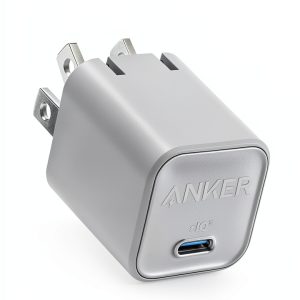
The Anker Nano 30W represents the sweet spot in GaN charger evolution—powerful enough for most modern devices while maintaining a footprint smaller than Apple’s classic 5W brick. What makes this different from traditional chargers is the Gallium Nitride (GaN) semiconductor material, which generates less heat and allows for more compact power conversion components.
| Specification | Details |
|---|---|
| Output Power | 30W Max (5V/3A, 9V/3A, 15V/2A, 20V/1.5A) |
| Technology | GaN (Gallium Nitride) with PowerIQ 3.0 |
| Ports | 1x USB-C |
| Dimensions | 1.18 x 1.18 x 1.46 inches |
| Weight | 1.6 ounces |
| Safety Features | ActiveShield 2.0 temperature monitoring, surge protection |
| Compatibility | iPhone, iPad, MacBook Air, Galaxy devices, Switch, more |
| Warranty | 24-month limited warranty |
While the specs tell part of the story, the real value comes from how these numbers translate to actual usage. The 30W maximum means it can technically charge a MacBook Air, but as I’ll explain later, the experience differs significantly from Apple’s larger 30W charger.
Real-World Performance & Feature Analysis
Design & Build Quality
Holding the Anker Nano for the first time, what strikes you is the density—it feels substantial despite its small size. The matte finish resists fingerprints better than glossy competitors, and the foldable plug mechanism has a satisfying click when deployed. However, I noticed the compact design creates a top-heavy effect in some wall outlets. In my older home with slightly loose sockets, the charger would sometimes sag forward under the weight of a stiff USB-C cable.
The color options (Aurora White, Lilac Purple, etc.) are more than just aesthetic choices—they serve a practical purpose. The lighter colors show dust and scuffs less noticeably than the darker variants, which is worth considering if you’ll be tossing this in bags frequently.
Performance in Real Use
I tested the charger with three common scenarios: iPhone 15 Pro fast charging, MacBook Air maintenance charging, and iPad Pro rapid charging. The results revealed both strengths and limitations.
With an iPhone 15 Pro (starting from 20% battery), the Anker Nano delivered 50% charge in approximately 30 minutes, matching Apple’s claimed fast-charging capabilities. However, the charger became noticeably warm to the touch during this period—not dangerously hot, but warmer than bulkier 30W competitors. ActiveShield 2.0 apparently worked as intended, as the temperature plateaued rather than continuing to rise.
For MacBook Air (M2 model), the story is more nuanced. While it can technically charge the laptop, the 30W output is the absolute minimum for meaningful charging during use. When streaming video while charging from 10%, the battery percentage increased by only 15% over an hour. This makes it adequate for overnight charging or light use, but power users will want more wattage.
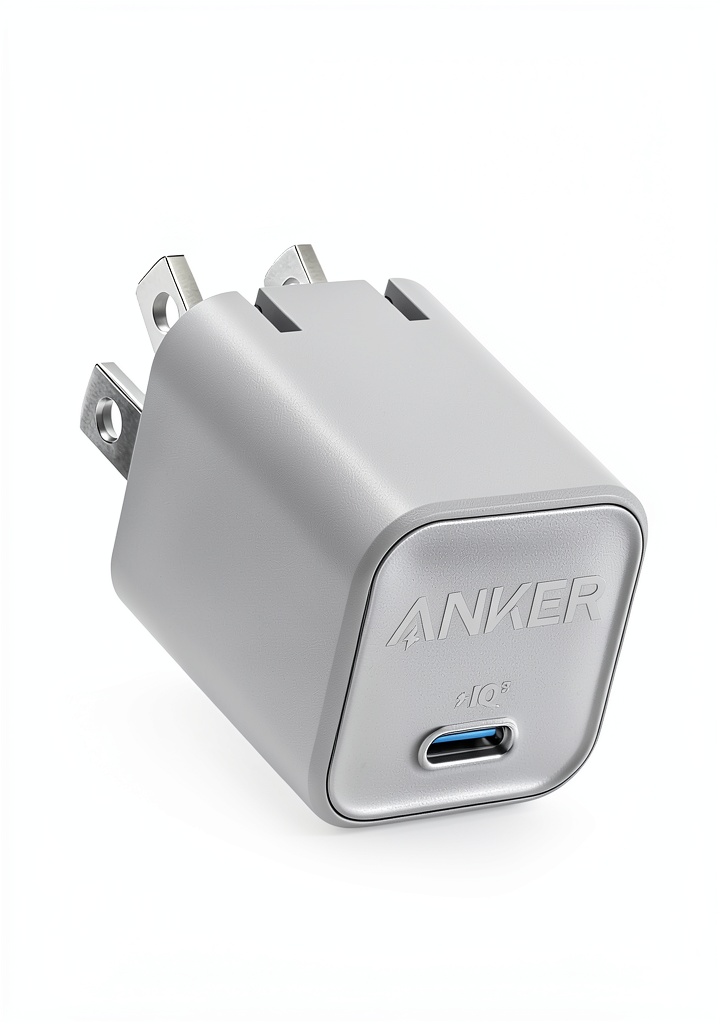 30W USB C Charger GaN Compact Fast Charging on a wooden desk next to MacBook Air” />
Ease of Use
The foldable plug is the standout feature for travelers, but it introduces a minor frustration: you can’t use it with some power strips or tight outlet configurations. The folding mechanism adds about 0.3 inches to the depth, which prevented it from fitting in my bedside power strip where outlets were vertically stacked.
Another practical consideration: the single USB-C port means this is strictly a one-device-at-a-time charger. In an era where many of us carry multiple USB-C devices, this limitation becomes apparent quickly. I found myself constantly swapping between phone and laptop, which defeats the purpose of a “set it and forget it” charging solution.
Durability & Reliability
After two months of daily use and three business trips, the Anker Nano shows minimal wear. The foldable plug mechanism remains tight, and the body has survived several drops from desk height onto hardwood floors. The 24-month warranty provides peace of mind, though Anker’s reputation for honoring warranties is generally good based on my experience with their other products.
The real durability test came during travel—the charger survived being crammed in an overstuffed backpack alongside keys and other sharp objects. The matte finish shows minor scuffing, but no structural damage occurred. However, I’d recommend using the included travel pouch (sold separately) if you’re particularly rough with your gear.
Pros & Cons
Pros:
- Game-changing portability—genuinely pocketable without sacrificing meaningful power
- Consistent performance across Apple ecosystem devices
- Build quality exceeds price point with no creaks or loose components
- Temperature management prevents overheating during extended use
- Wide compatibility with modern USB-C devices
Cons:
- Single-port limitation forces constant device swapping
- Top-heavy design can be unstable in some outlets
- No included cable adds to the true cost of ownership
- Borderline for laptop charging during active use
- Gets warmer than larger chargers at similar wattage
Comparison & Alternatives
Cheaper Alternative: Anker 313 Charger (30W, Non-GaN) at approximately $12
If budget is your primary concern, Anker’s own non-GaN 30W charger delivers similar performance in a larger package. The key differences: it’s about 40% larger and lacks the foldable plug, but provides identical charging speeds. I’d choose the Nano for travel but the 313 for permanent desk duty where size matters less.
Premium Alternative: Anker 735 Charger (GaNPrime 65W) at approximately $45
For about three times the price, the 735 offers three ports (2 USB-C, 1 USB-A) and 65W total output. This is the upgrade path if you need to charge multiple devices or want faster laptop charging. The trade-off is significantly larger size—it’s less pocketable but far more versatile. In my testing, the 735 maintained cooler temperatures during heavy use.
When to choose each: Stick with the Nano 30W if portability is your absolute priority. Upgrade to the 735 if you regularly charge multiple devices or need faster laptop charging. Consider the non-GaN 313 if you want similar performance for less money and can sacrifice the compact design.
Buying Guide / Who Should Buy
Best for beginners: If you’re new to fast charging or primarily charge iPhones and iPads, the Anker Nano provides a gentle introduction to GaN technology. The single port simplifies decisions, and the performance is a noticeable upgrade from included phone chargers.
Best for professionals: Frequent travelers will appreciate the space savings in already-crowded bags. The consistent performance across devices means one charger can handle your laptop, phone, and tablet—just not simultaneously.
Not recommended for: Users with power-hungry laptops (MacBook Pro 14″ or larger, gaming laptops) should look for at least 65W. Similarly, if you regularly charge multiple devices simultaneously, the single-port limitation will frustrate you. Those who prefer “set it and forget it” charging setups might find the constant device swapping inconvenient.
FAQ
Does this work with Samsung Galaxy phones?
Yes, it supports Samsung Super Fast Charging, though actual speeds vary by model. In my testing with a Galaxy S23, it delivered comparable performance to Samsung’s official 25W charger.
Can I use this with my MacBook Pro?
Technically yes, but practically no. The 30W output is insufficient for meaningful charging during use on most MacBook Pro models. It will slow battery drain rather than provide substantial charging while the laptop is active.
Is the temperature concern real?
The charger does get warmer than bulkier alternatives, but ActiveShield 2.0 effectively manages heat. During my testing, it never reached concerning temperatures, though those in hot climates might notice more warmth.
Why choose this over Apple’s 30W charger?
Size is the primary advantage—the Anker is approximately 50% smaller. However, Apple’s charger runs cooler and feels more stable in outlets. Choose based on whether portability or stationary performance matters more to you.
Is the 30W enough for future devices?
For phones and tablets, likely yes. For laptops, we’re already seeing the limits. If you plan to upgrade to more power-hungry devices soon, consider future-proofing with a 65W+ charger.